Noticed fluid under your car or unusual gear changes while driving? These could be early signs of a gearbox problem. Gearbox Oil Leak Symptoms should never be ignored because low transmission fluid can lead to poor performance, overheating, and expensive repairs. From reddish or dark fluid patches to burning smells, slipping gears, and unusual noises, recognising the warning signs early can help protect your vehicle.
This guide explains seven common Gearbox Oil Leak Symptoms, their possible causes, and what drivers should check when a leak appears. You will also discover when professional inspection is necessary and why ignoring Gearbox Oil Leak Symptoms could result in serious transmission damage and costly replacement work.
A small oil patch on the driveway looks harmless, but it rarely is. A gearbox oil leak drains the gear oil that protects every gear, bearing and shaft inside your transmission. Once the oil level drops, friction rises, heat builds and repair bills grow. This guide covers seven warning signs, the usual causes and the steps to take before a small seep becomes a full rebuild.
More Read: Fine for No MOT: 7 Key Facts Every UK Driver Should Know
What Is a Gearbox Oil Leak?
Your gearbox holds transmission fluid or gear oil that lubricates and cools its moving parts. Seals, gaskets and a closed casing keep that fluid inside. When one of these parts wears, cracks or loosens, oil escapes. Manual and automatic units both leak. Manual boxes often show it near the output shaft seal and the drain plug. Catch it early and the fix stays small.
Seven Warning Signs of a Gearbox Oil Leak
Each sign can appear alone. However, two or more together point to a bigger problem.
Oil Spots Under the Car
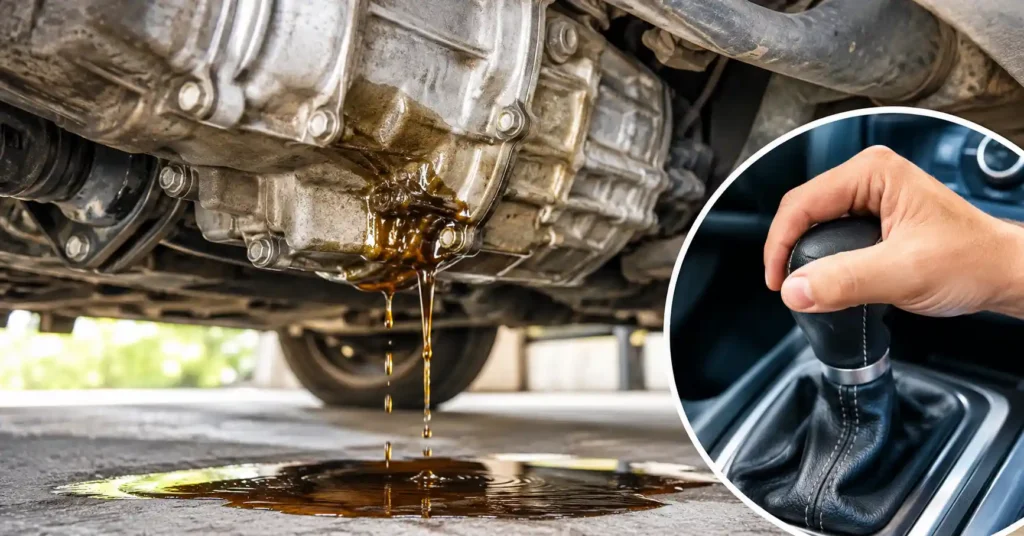
Fresh drips under the middle of the vehicle point towards the gearbox. Gear oil looks amber, red or dark brown, and it feels thick between your fingers. It also smells sharper than engine oil. Slide clean cardboard under the car overnight to mark the exact spot.
Hard or Stiff Gear Shifting
Low oil raises friction between the synchronisers and the gears. The lever feels stiff, notchy or slow to engage. Automatic cars may shift late or with a jolt.
Grinding or Whining Noises
Dry bearings and gear teeth make noise fast. A whine often signals bearing wear, while a grinding noise during a shift means gears meet without enough lubrication. These sounds usually show up first on a cold start.
Burning Smell
Overheated oil gives off a sharp burnt odour. Leaking oil that lands on a hot exhaust smells similar. Either way, stop and check the car straight away.
Slipping Gears
The engine revs, yet the car barely responds. Low fluid cuts hydraulic pressure in an automatic, and the clutch packs slip. In a manual, oil that reaches the clutch causes the same trouble.
Dashboard Warning Light
Modern cars track transmission temperature and pressure. The ECU can switch on a warning light or store fault codes. Read the code. Do not clear it and carry on.
Low Oil Level or Dirty Oil
Check the dipstick where fitted, or the fill plug on sealed units. Milky, gritty or metallic oil signals contamination or internal wear. A falling level with no visible drip suggests a hidden leak.
Quick Symptom Guide
| Symptom | Likely Meaning | Urgency |
| Oil spots | Seal or gasket seep | Medium |
| Stiff shifting | Low oil or worn synchronisers | High |
| Grinding or whining | Bearing or gear wear | High |
| Burning smell | Overheating or oil on exhaust | High |
| Slipping gears | Low pressure or clutch contamination | Critical |
| Warning light | Temperature or pressure fault | High |
| Low or dirty oil | Leak or internal damage | Medium to high |
Common Causes of Gearbox Oil Leaks
Most leaks start at a few weak points.
| Cause | Where It Happens | Usual Fix |
| Worn shaft seal | Input and output shafts | Replace the seal |
| Failed gasket | Sump pan or housing joint | Reseal or replace gasket |
| Loose drain or fill plug | Bottom or side of casing | Tighten or fit a new washer |
| Blocked breather | Top of the gearbox | Clean or replace breather |
| Cracked casing | Housing body | Repair or replace housing |
| Overfilled oil | Whole unit | Drain to the correct level |
Age, heat and rough driving speed up the damage. Cold snaps also harden rubber seals, so leaks often appear in winter. Therefore, owners of older cars should inspect the gearbox before the first frost.
More Read: Why Winter Is the Best Time to Scrap Your Car
How Serious Is the Leak?
- Monitor closely: a light oil film with no dripping.
- Act this week: steady drips, visible spots or a slowly falling level.
- Stop driving: slipping gears, grinding, a burning smell or a red warning light.
What to Do When You Spot a Leak
- Park on level ground and inspect the gearbox with a torch.
- Wipe the area clean, run the engine and watch where fresh oil appears.
- Check the oil level using the method in your handbook.
- Top up only with the grade the manufacturer lists.
- Book a garage inspection before your next long trip.
A heavy leak can also cause an MOT failure. If your car already has an MOT failure, compare repair costs with the car’s value before you spend more.
Repair or Scrap?
Seal and gasket jobs usually cost a modest amount. Internal gear damage costs far more. As a result, an older car with a failing gearbox can quickly cost more to fix than it is worth. Owners of a damaged car can sell it as it stands, even when it will not drive. Our guide weighs both routes in detail.
More Read: Should You Sell Your Car or Scrap It? UK Guide 2026
If you decide to scrap my car, a licensed buyer can collect it and handle the DVLA paperwork.
How to Prevent Gearbox Oil Leaks
- Check the gear oil at every major service.
- Use only the oil grade the manufacturer recommends.
- Avoid forcing gears or riding the clutch.
- Keep the breather clear of dirt.
- Fix small seeps before they grow.
Good engine care matters too. Clean injectors help the whole drivetrain run smoothly.
More Read: Best Fuel Injector Cleaner: 7 Top Picks for UK Drivers
Conclusion
A gearbox rarely fails without warning. Oil spots, stiff shifting, odd noises, a burning smell, slipping gears, warning lights and a low oil level all tell the same story. Act on the first sign. A cheap seal today saves an expensive gearbox tomorrow. When in doubt, ask a qualified mechanic to inspect the car.
Frequently Asked Questions
Can I drive with a gearbox oil leak?
Only for a very short trip if the leak is light, and never if the gears slip or grind.
How much does it cost to fix a gearbox oil leak?
A seal or gasket repair is usually cheap, while internal damage can cost thousands.
What colour is gearbox oil?
It is usually amber, red or dark brown and feels thicker than engine oil.
How long can a gearbox run with low oil?
Not long, because low oil quickly causes overheating and gear damage.
Is a gearbox oil leak the same as an engine oil leak?
No, gearbox oil is thicker, smells sharper and drips from the middle of the car.