
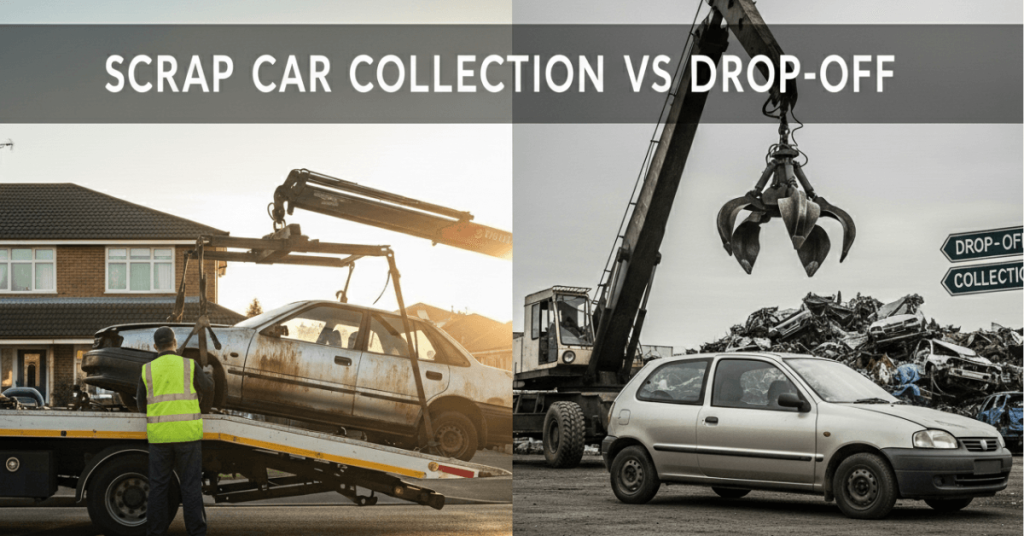
Getting rid of an old or damaged vehicle is a practical decision, but the method used can shape the whole experience. Two main options exist in the UK. One is booking a collection from home. The other is driving or transporting the car to a scrapyard. This guide compares both routes so drivers can decide what fits their situation best. The focus stays on convenience, time, cost, and peace of mind.
The topic of scrap car collection vs drop off often comes up because both routes lead to legal disposal, but the journey feels quite different. Each option suits different needs, and this comparison makes those differences clear.
Understanding The Two Main Options
· What Collection Means
Collection involves a licensed operator coming to the vehicle’s location, loading it onto a truck, and taking it away for recycling. The owner stays at home while the process happens.
· What Does Drop Off Mean?
Drop off means the owner drives or transports the vehicle to an authorised treatment facility. The yard then completes the recycling process on-site.
Both lead to the same legal outcome. The differences appear in effort, time, and control.
Convenience And Time
· Time Savings With Collection
For many drivers, time is the biggest factor. A collection service removes the need to arrange transport or take time off work.
This is why people often ask whether scrap car collection is better than drop off. For busy households, the answer often feels positive because the vehicle leaves from the driveway with minimal planning.
Services like ScrapMyCarUK offer fast bookings and even same-day scrap car collection, which suits urgent situations such as parking restrictions or insurance deadlines.
· Time Commitment With Drop Off
Drop off takes more effort. The vehicle must be drivable or moved by trailer. Travel time, fuel costs, and waiting at the yard all add up. This route suits drivers who enjoy being hands-on or live close to a scrapyard.
Effort And Physical Demand
· The Collection Keeps Effort Low
No driving, no towing, and no heavy lifting make collection attractive. This suits older drivers, people without access to a tow bar, or anyone dealing with a non-runner.
· Drop-off Needs More Involvement
Drop off requires planning. The car must reach the yard safely. That can involve jump-starting, arranging a tow, or hiring a trailer. Some drivers enjoy the sense of control, but it adds effort.
Costs And Payments
· Collection Pricing
Some worry that collection costs more. In reality, many services include collection in the quote. The price offered reflects the scrap value minus logistics. For many cars, this still feels fair.
· Drop off Pricing
Drop off may offer slightly higher payouts since the yard saves on transport. For drivers who live nearby and have the means to move the car, this can feel rewarding.
The choice often depends on how much time and effort you feel is worth trading for a small difference in payment.
Legal And Environmental Responsibilities
Both options must follow UK law. Vehicles must go to licensed authorised treatment facilities. Cash payments are banned, and owners must receive a Certificate of Destruction.
Collection companies usually handle the paperwork and DVLA notifications, which adds peace of mind. Drop off requires the owner to manage this at the yard, which suits people who are comfortable with forms and procedures.
Flexibility And Scheduling
· Collection Fits Around Daily Life
Booking a collection allows a choice of time slots. This fits around work, school, and family life. It also avoids driving in traffic or dealing with yard opening hours.
· Drop off Offers Direct Control
Some drivers like choosing the exact yard and time. This gives a sense of involvement and transparency. It suits people who prefer to see the process in person.
Safety And Peace Of Mind
Collection reduces road risk. No broken car on the motorway and no risk of breakdown on the way to the yard. For vehicles with mechanical issues, this alone makes the collection feel safer.
Drop off can feel safe for roadworthy vehicles, but damaged cars increase risk and stress.
Comparing The Experiences Side By Side
The collection feels calm and low effort. Drop off feels active and hands-on. Both lead to legal recycling and responsible disposal.
In the middle of this choice, many people look at our specialist services, such as scrap van collection, which combine collection with smaller vehicle transport for tight spaces or urban areas. This shows how the market adapts to practical needs.
Which Suits Different Types Of Drivers
Collection suits
- People with broken or unsafe cars
- Busy households
- Drivers who value convenience over a small price difference
- Anyone without towing equipment
Drop off suits
- Drivers living close to a scrapyard
- Owners with a roadworthy car
- People who enjoy handling the process personally
- Anyone seeking maximum payout and willing to invest time
Answering Common Questions
Many people ask what the easiest way to scrap a car is. For most, the answer feels like a collection because it removes travel, risk, and paperwork pressure. For others, ease comes from control, which makes the drop-off feel better.
Ease is personal. Convenience, time, and comfort shape the answer more than any rule.
Conclusion
The collection offers comfort, speed, and low effort. Drop off offers control and sometimes slightly higher payment. The best choice depends on the car’s condition, the owner’s schedule, and access to transport. No option stands as the universal winner. Each fits different lifestyles and priorities.
The debate around scrap car collection versus drop-off centres is on time versus control. Collection removes effort and risk, fitting modern busy lives. Drop off rewards involvement and suits those close to scrapyards with working vehicles.
The better option is the one that fits daily life without stress. For most people today, that means letting the professionals handle collection while life continues as normal.
We provide a simple way to arrange legal vehicle disposal across the UK with trusted partners and fair pricing.